
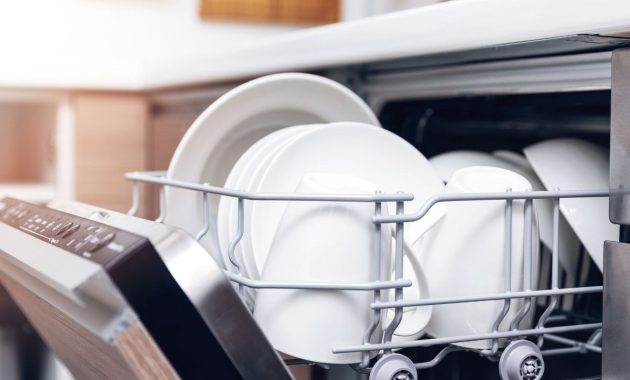
Learn how to clean your dishwasher and how often to perform each task to keep this essential kitchen appliance running efficiently. Follow these straightforward steps to remove food residue, grease, and soap buildup so your dishwasher continues to clean effectively and smell fresh.
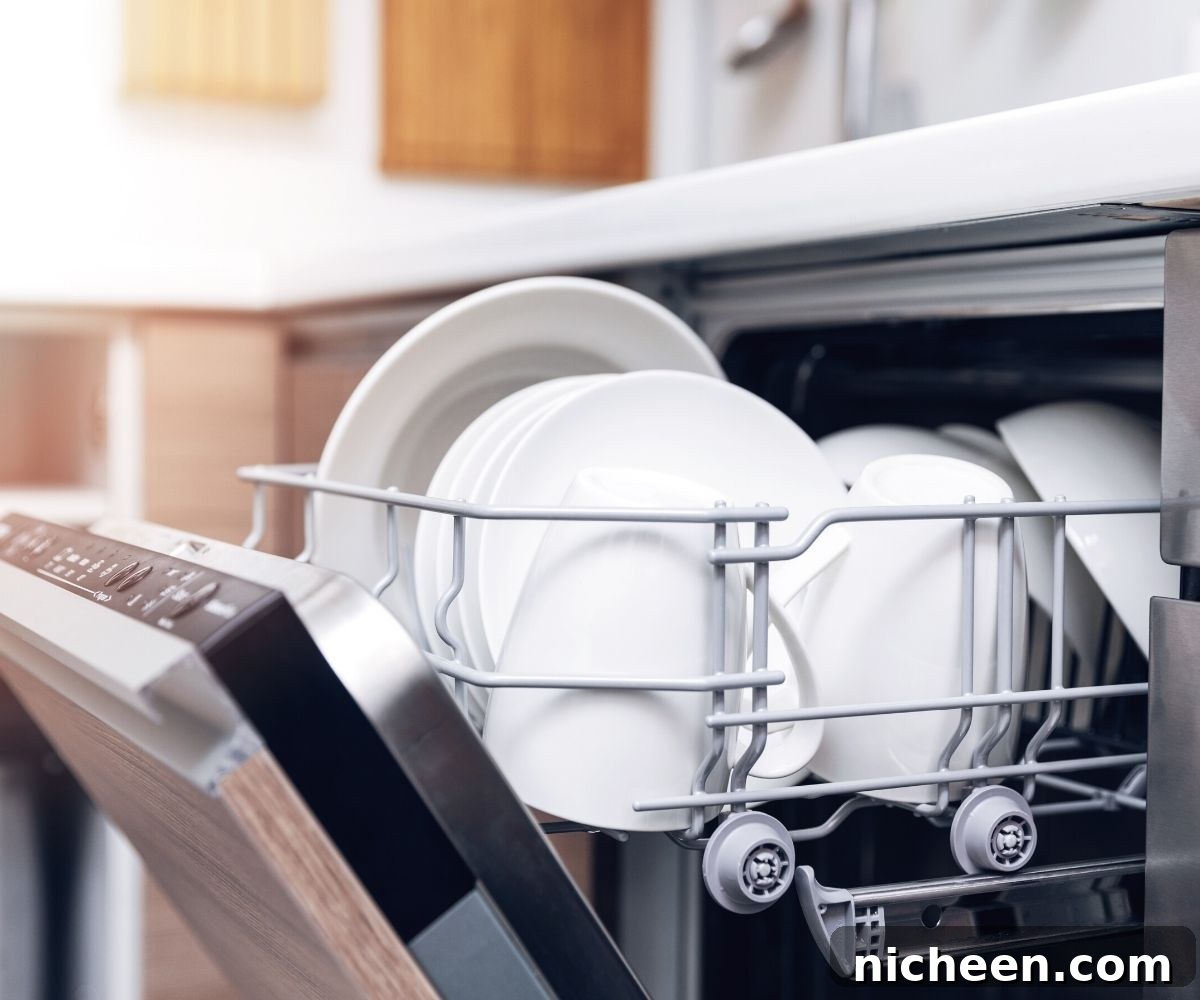
Because the dishwasher’s job is to clean dishes, it’s easy to assume the appliance itself doesn’t need attention. In reality, food particles, grease, and detergent residue collect over time and can reduce cleaning performance or cause odors. A regular maintenance routine keeps your dishwasher working at peak efficiency and helps prevent clogs and unpleasant smells.
Cleaning a dishwasher is simple when you follow a clear, step-by-step method. Below is an easy-to-follow guide to cleaning the interior, exterior, and key components of your dishwasher so it stays in top condition.
Also see guidance on How to Clean Your BBQ Grill and How to Clean Your Baseboards for other home cleaning projects.
Related: Kitchen Organization Tips
What is the best way to clean the inside of a dishwasher?
If you’re unsure where to begin, use this practical dishwasher cleaning guide to walk you through the most important tasks. These steps target the typical trouble spots: food debris, gaskets, filters, drains, and deposits from detergent.
Follow this easy method for cleaning your dishwasher:
Begin with an empty dishwasher and remove the bottom rack so you can access the floor, drain, and filter.
- Clean food debris. Food scraps and bits tend to collect at the bottom and are a common source of odor. Remove the bottom rack and use a paper towel or cloth to collect loose food particles. Check corners and areas around the spray arm where debris can hide.
- Wipe down the door. Use a damp microfiber cloth to remove residue and smudges from the inside of the door. Clean the gasket with a soft-bristled toothbrush or cloth, paying attention to the crevice between the gasket and door to remove trapped grime.
- Clean the filter. Most dishwashers have a removable filter located under the bottom spray arm. Unlock and lift out the filter, then rinse it under hot water. Use a soft-bristled brush to scrub the mesh and frame until food and grease are loosened. Rinse again and reinstall. If you’re unsure how, consult your owner’s manual for instructions specific to your model.
- Clear the drain trap. Standing water or slow draining often points to debris around the drain trap. With the bottom rack removed, inspect the area around the drain and remove any visible obstruction with a cloth or paper towel.
- Run a cleaning cycle with tablets or a vinegar solution. For a deep clean, use a dishwasher cleaning tablet as directed by the manufacturer. Alternatively, place a dishwasher-safe cup filled with one cup of white vinegar on the top rack and run a normal hot cycle without detergent to dissolve grease and remove odors. After that cycle finishes, sprinkle a layer of baking soda across the dishwasher floor and run a short hot cycle to brighten and deodorize the interior.
- Wipe the exterior. Finish by cleaning the outside of the machine. For stainless-steel fronts, use a cleaner designed for stainless steel and follow the grain to avoid streaks. For other finishes, an all-purpose cleaner or a damp cloth will remove fingerprints and smudges.
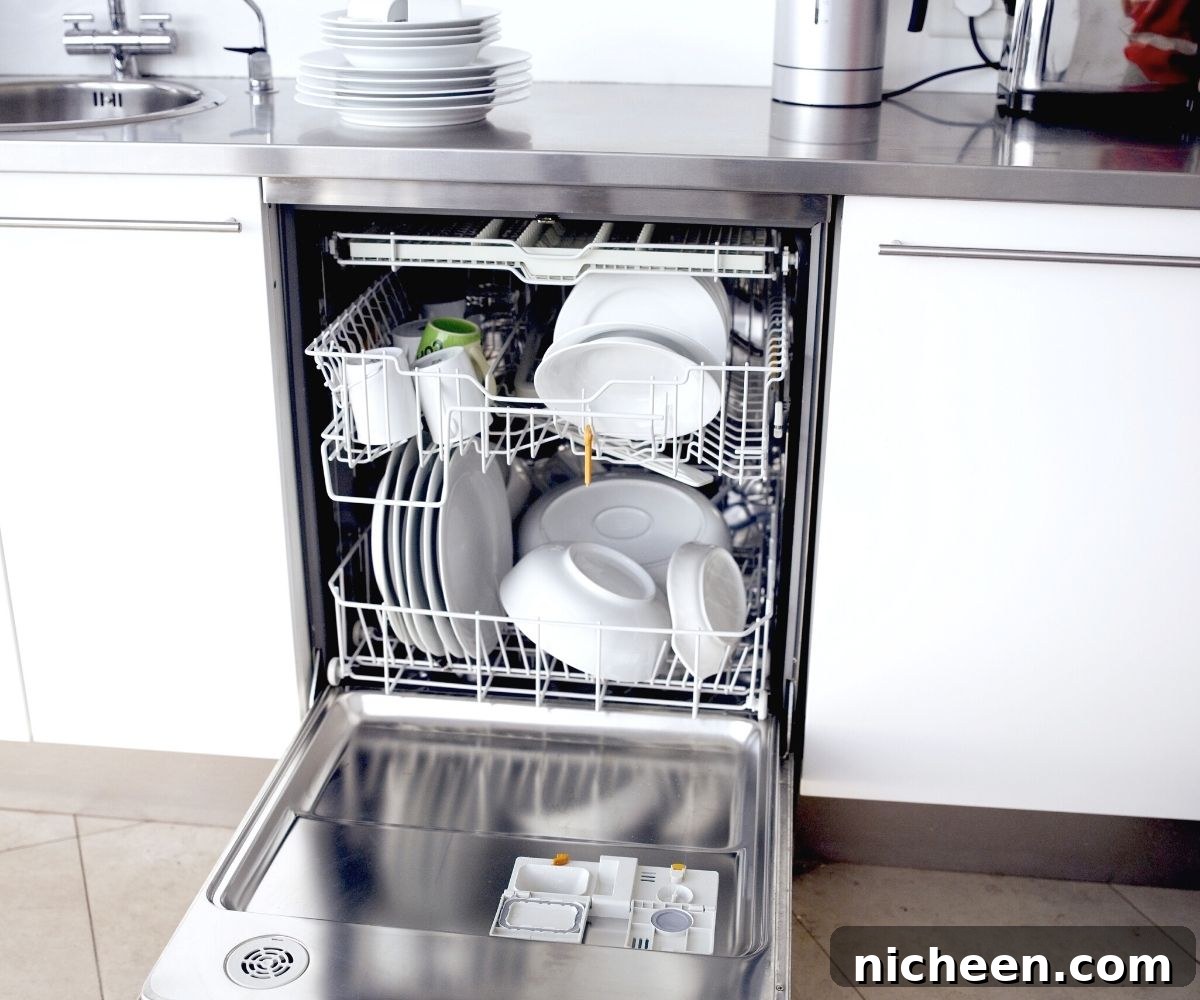
How often should you clean your dishwasher?
Deep cleaning isn’t required every day, but performing routine tasks on a schedule helps prevent problems and keeps dishes consistently clean. Use this dishwasher cleaning schedule to stay on top of maintenance:
- Daily: Remove large food scraps from dishes before loading and check that the drain area remains clear.
- Weekly: Wipe down the interior face of the door and the exterior surfaces to remove spills and fingerprints.
- Monthly: Perform a deeper clean: remove and wash the filter, clear debris from the drain trap, and run a vinegar or tablet cleaning cycle to remove buildup and odors.
Additionally, inspect the interior after each load for stubborn food or debris that might clog the filter or drain if left in place.
Dishwasher cleaning tips
These practical tips will protect your dishwasher’s components and help avoid damage while improving cleaning results:
- Avoid bleach-based cleaners. Bleach can damage stainless-steel interiors and components—stick to recommended dishwasher cleaners or natural alternatives like vinegar and baking soda.
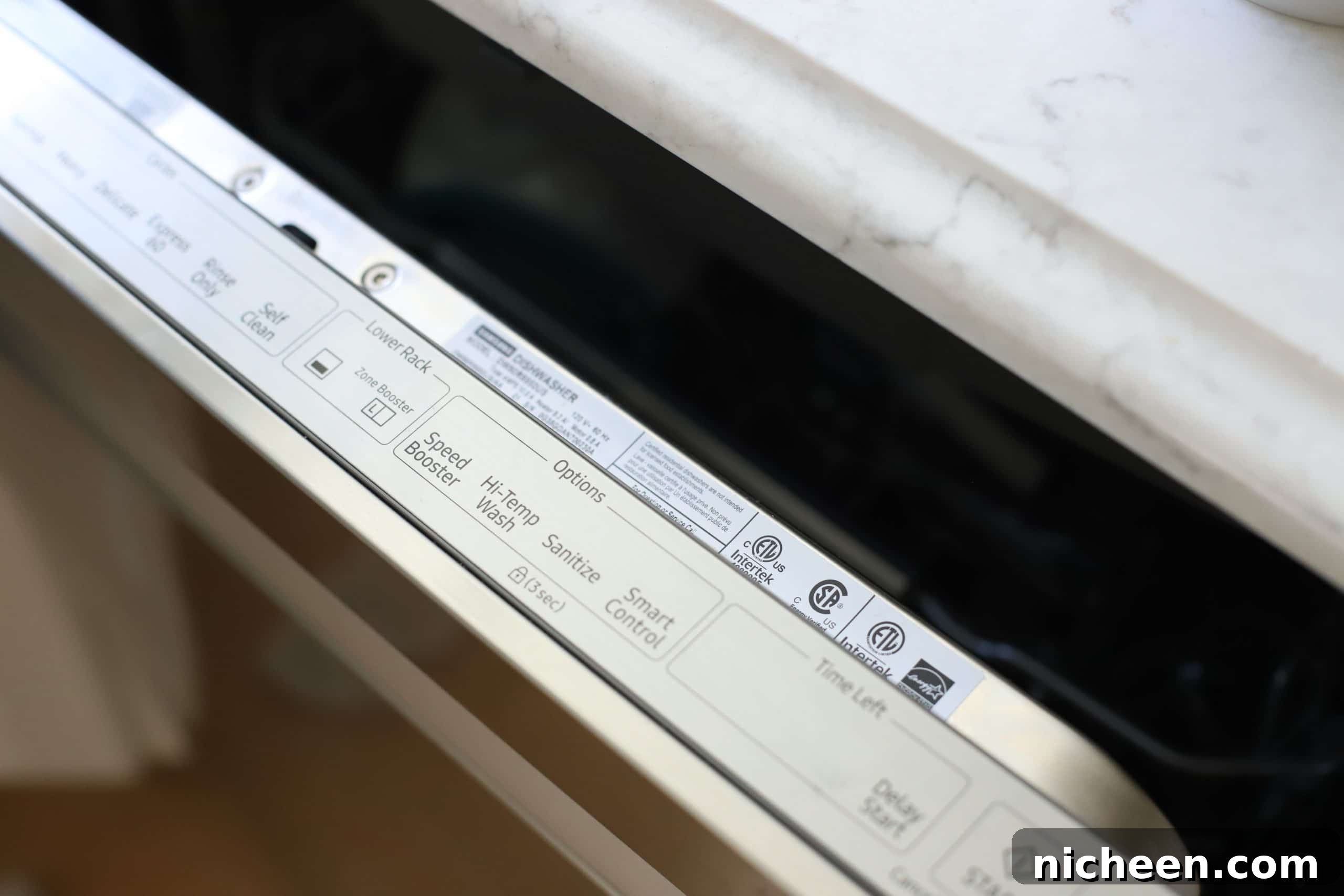
- Use a damp cloth on touch controls and buttons. To prevent moisture damage, wipe touchscreens and control panels with a barely damp microfiber cloth rather than spraying cleaners directly on them.
- Rinse or scrape heavy food from dishes before loading. Removing large food particles before washing reduces buildup in the filter and drain and improves washing performance. Also remove any stickers or tags from new dishware before washing.
Bonus cleaning advice
- Choose a high-quality dishwasher detergent and use a rinse aid when needed to reduce spotting and film on glassware and dinnerware.
- Read product directions for cleaning tablets and specialized dishwasher cleaners—some require you to run them without dishes or in a specific cycle.
More cleaning guides
For other appliance care, see How to Clean Your Refrigerator and How to Clean Your Washing Machine. If you need general laundry guidance, consult How to Do Laundry for step-by-step instructions.
Keep in touch
FOLLOW US on FACEBOOK, TWITTER, INSTAGRAM, and PINTEREST to discover more recipes, home tips, and DIY projects.