
Take the stress out of family meal planning with this straightforward guide. Learn how to plan your week’s meals in about 10 minutes and save time and money while eating better.
Be sure to explore our Easy Family Dinners and 50 Delicious Sheet Pan Dinner ideas for quick, family-friendly recipes.
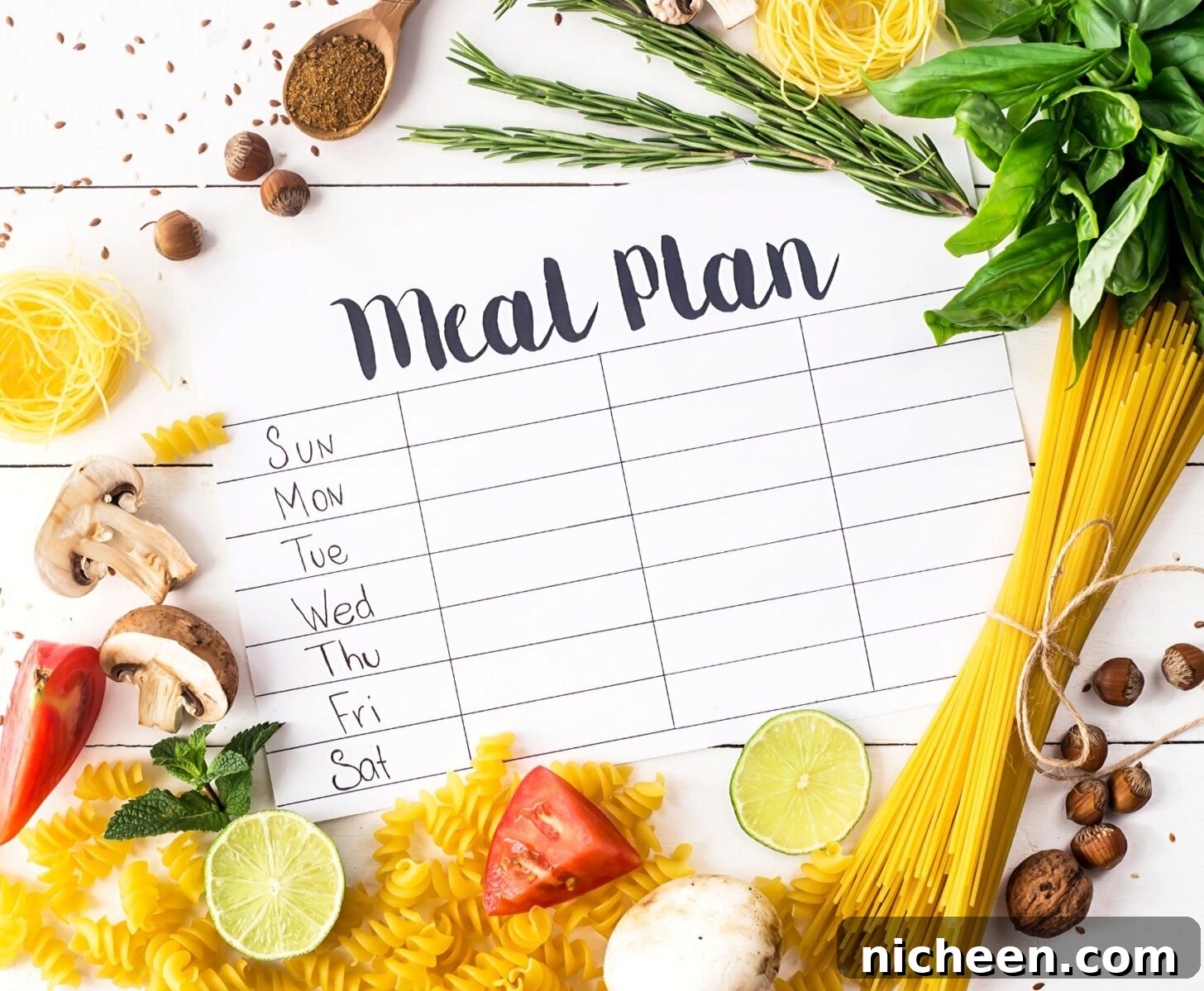
Managing a household is busy work—there’s always a mess to clean or another meal to prepare. One simple habit that brings order and saves time is meal planning. With a little planning, your grocery budget stretches further, you waste less food, and you make healthier choices.
This beginner’s guide offers practical tips to get started, plus a printable meal-planning template you can fill out on your computer or by hand.
What Is Meal Planning?
Meal planning means deciding your meals for a week or month at a time instead of each night. It reduces last-minute stress, shortens grocery trips, and helps you make nutritious choices even on busy days.

Why Make a Meal Plan?
Sharing meals is one of the most valuable daily routines for family connection. But evenings can be hectic, and meal planning helps ensure dinner happens without stress. Planning ahead helps you shop smarter, cook faster, and serve more balanced meals.
PRO TIP: When you plan ahead you’re more likely to choose nutritious meals — a win for both family health and your budget.
Before You Start
A couple of small steps make meal planning much easier:
- Organize your kitchen. A tidy, well-organized space speeds up cooking and clean-up.
- Stock pantry essentials. Keep staples on hand so you don’t make last-minute runs for basic ingredients.
Helpful Meal Planning Tips
- Create a 4–6 week menu rotation. Build a list of family favorites, add a few new recipes, and rotate them to keep variety without reinventing the wheel every week.
- Collect inspiration. Use a Pinterest board or a dedicated folder for recipes you want to try.
- Repeat favorites strategically. Reuse meals across the month but space them out so dinners don’t feel repetitive.
- Aim for balance. Plan meals with a mix of proteins, carbohydrates, and vegetables, and vary flavors—sweet, savory, tangy, or mildly spicy—to keep meals interesting.
- Prioritize color and variety. Adding fruits and vegetables not only boosts nutrition but makes plates more appealing.
- Keep it simple. Meals don’t have to be elaborate—stick with dishes your family enjoys and add one new recipe occasionally.
- Plan beyond dinner. Mapping out breakfasts and lunches saves more time and reduces decision fatigue during the week.
Bonus Tips
- On busy weeks rely on slow-cooker or make-ahead meals for quick dinners. The “cook once, eat twice” approach saves time and stress.
- Organize paper recipes in a simple binder with plastic sleeves; use tabs to mark favorites.
- Make your plan visible. Posting a weekly plan on the fridge keeps everyone informed and reduces “what’s for dinner?” questions.
- If you prefer digital tools, create a meal sub-calendar in Google or Outlook and share it with family members.
- Keep pantry staples well stocked so you can pull together meals quickly; a basic checklist of essentials helps.
How to Map Your Meal Plan
Here’s a fast, practical way to put your week on paper (or a digital sheet):
- Use a two-column template—meals for each day on the right and a grocery list on the left.
- Choose meals from your recipe list and assign them to days, allowing room for eating out or leftovers.
- Turn the assigned meals into a concise shopping list so you buy only what you need.
Meal Planning Template
Print or download a meal-planning template to make the process repeatable. On the right, write each day’s meal; on the left, jot the ingredients as you go. This usually takes under 10 minutes.
Save time by batch-cooking on the weekend: roast vegetables, grill chicken, or brown ground beef, then mix and match through the week for bowls, casseroles, or stir-fries.
Example staples to batch-cook: grilled chicken thighs, cooked rice, roasted broccoli, and sautéed ground beef. These components can transform into multiple meals with minimal prep.
Crock Pot Recipe Ideas
Crock Pot Honey Garlic Chicken
Healthier Crock Pot Buffalo Chicken
Crock Pot Vegetable Lasagna
Crock Pot Beef Stroganoff
Sample Week
Here’s a simple weekly sample to try:
MONDAY: Tater Tot Casserole
TUESDAY: Chicken Enchilada Verde Soup
WEDNESDAY: Quinoa Frittatas
THURSDAY: Healthy Baked Chicken Tenders
FRIDAY: Fish Tacos with Mango Salsa
SATURDAY: Crockpot Pizza Casserole
SUNDAY: Asian Chicken Lettuce Wraps
Kitchen Basics and Resources
Use tools and techniques that simplify cooking and storing food:
How to Freeze Just About Anything—freezing smartly saves money and time.
How to Cook Bacon in the Oven—batch-cook bacon for the week.
How to Freeze Fruits and Vegetables—preserve seasonal produce for easy meals.
Simple Solutions for Kitchen Organization—ideas to streamline your space.
Crock Pot Tips and Tricks—get the most from your slow cooker.
Planning meals ahead not only reduces calories and stress but also helps control food costs. Batch-cook and freeze extra portions to maximize your time and budget. You’ve got this!
This post was originally published in March 2017 and updated with additional information on April 8, 2020.