

Make this year your most productive yet with an easy, practical 5-Step Goal Setting Process. Follow these clear steps to create SMART goals that are achievable, measurable, and aligned with your priorities.

The Basic Steps of Goal Setting
SMART goal setting is a reliable approach for turning intentions into results. When you use a structured process, you increase the odds of making meaningful progress—whether your aim is starting a business, saving for a family vacation, or simply finding more balance.
Many people set goals, but fewer follow the practical steps that make those goals stick. The most important action is simple: write your goals down. Capturing your goals on paper, a board, or in a journal makes them more concrete and helps you stay accountable.
If you’re ready, here’s a concise, effective roadmap: the Easy 5-Step Process for Goal Setting. Use it to clarify priorities, create measurable targets, and build a plan you can follow.

Easy 5 Step Process for Goal Setting
Start by identifying your top priorities. Goals that align with what matters most to you are easier to commit to and maintain. For example, if your priority is family time, a meaningful goal might be “work no more than 20 hours a week.” Below are five focused steps to guide you from idea to achievement.
1. Set goals that motivate you
Choose goals that genuinely matter to you—not ones you think you should want. Motivation fuels consistency, so pick a manageable number of goals (aim for 3–7) that you can realistically focus on. Prioritize quality over quantity to avoid spreading yourself too thin.
2. Set SMART goals
SMART is an effective framework to ensure your goals are well-defined and achievable. Use these criteria when writing each goal:

S — Specific: Define exactly what you want to accomplish. Specific goals reduce ambiguity and make next steps clear.
Bad example – Write an eBook.
Good example – Write an eBook for busy parents that provides a four-week home organization plan, to be completed by January 31.
M — Measurable: Include a metric or milestone so you can track progress. Numbers and checkpoints create clarity and motivation.
Bad example – Save for a vacation.
Good example – Save $2,000 for a family vacation by June 30.
A — Actionable (Achievable): Start with an action verb and outline steps you can take. Break larger goals into actionable tasks.
Bad example – Be more consistent with meal planning.
Good example – Plan and prepare weekly meals every Sunday.
R — Realistic: Make sure your goal stretches you but remains attainable given your current resources and constraints. Ambitious goals are good—unrealistic ones lead to frustration.
Bad example – Be on a national dance show.
Good example – Learn basic ballroom dance routines and perform at a community event by December.
T — Time-Bound: Assign a deadline. A timeline creates urgency and helps prioritize tasks in your schedule.
Bad example – Lose weight.
Good example – Lose 10 pounds by March 15.
3. Put goals in writing
Writing down goals significantly improves follow-through. Keep your goals visible—use a journal, a planner, a printed worksheet, or a chalkboard. The act of recording your goals makes them real and gives you a reference to review regularly.
4. Make an action plan
Break each goal into concrete steps and schedule those steps in your calendar. An action plan clarifies what to do next and reduces overwhelm. Include short-term milestones, resources needed, and possible obstacles so you can adapt as you progress.
5. Stick to it
Persistence is often the most challenging part. Life will interrupt plans, so build routines that keep you moving forward. Set weekly or monthly check-ins to review progress, adjust timelines, and celebrate small wins. Put reminders in your calendar or task app to maintain accountability.
If you fall behind, reassess and refine your plan rather than abandoning the goal. Small, consistent steps compound over time and lead to meaningful results.

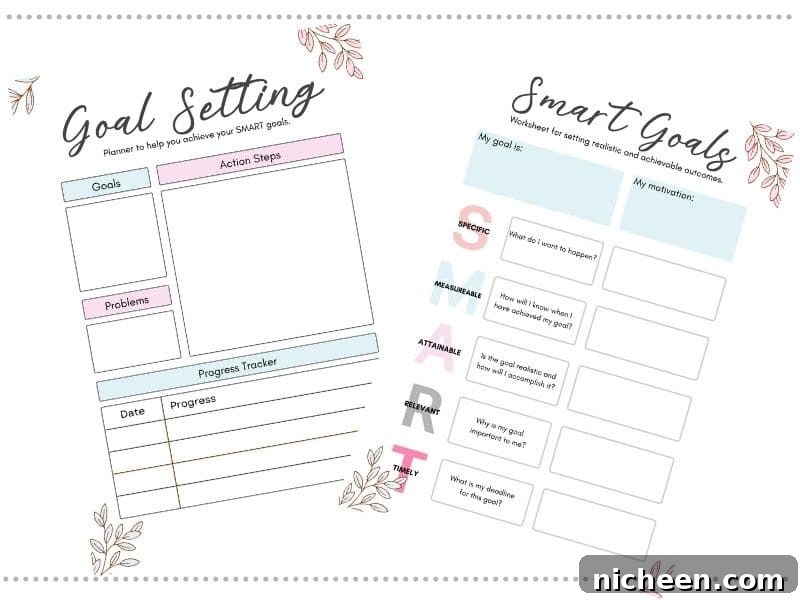
Grab Your FREE Goal Setting Worksheets
Use worksheets to map priorities, deadlines, and action steps so your SMART goals become reality.
To Recap
This five-step process—choose motivating goals, apply the SMART framework, write them down, create an action plan, and follow through—is a practical way to bring clarity and simplicity to your life. Use the worksheet, a chalkboard, or a journal to keep goals visible and actionable.
Start by listing your top priorities, then draft 3–7 SMART goals that support them. Break each goal into weekly tasks and schedule regular check-ins. Celebrate progress along the way and adjust as needed.
You’ve got this. Share your goals and your plan for achieving them—we’d love to hear how you’re making progress.
This post contains affiliate links. Disclosure policy here.
Follow to see more ideas on goal setting, family budgeting, meal planning, and simplifying daily life.