
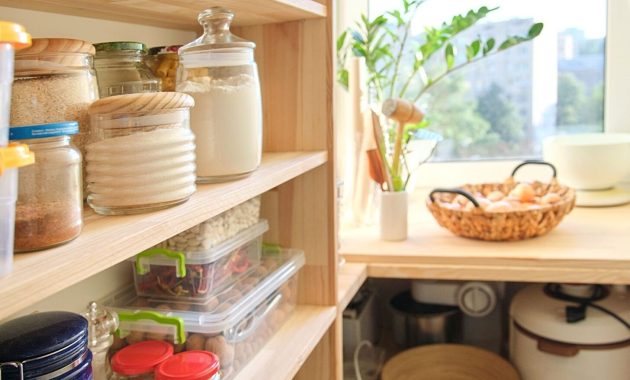
How to Organize a Pantry with ease. Practical, proven tips for storage, layout, and maintenance so your system stays functional long after the initial setup.
You may also be interested in related topics such as Organize Your Whole Kitchen and Kitchen Storage Ideas for additional inspiration.
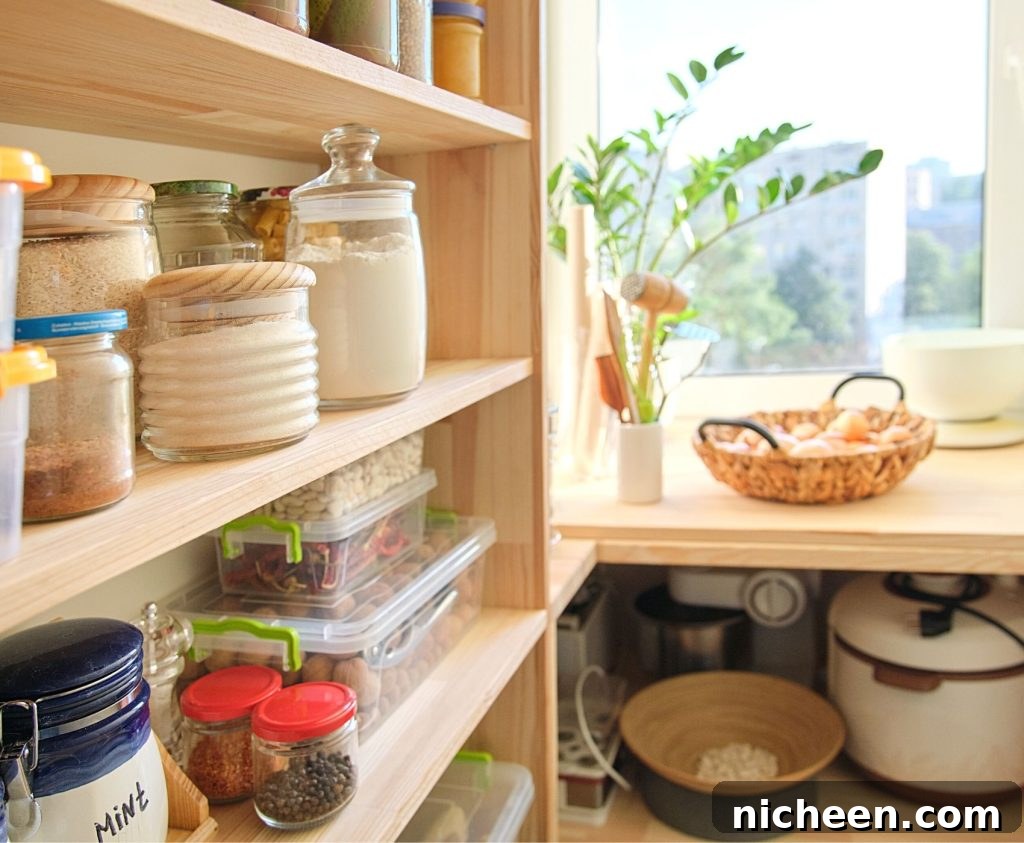
Step-by-Step Guide to Organizing Your Pantry
An organized pantry does more than look tidy. It speeds up meal preparation, reduces food waste, saves money and time, and makes your kitchen a safer, more efficient place to cook. Follow the steps below to create a pantry that works for your family and is simple to maintain.
A few basic pantry organization rules to follow:
Basic pantry rules
- Use bins and baskets to corral similar items.
- Store dry goods in clear, airtight containers to keep them fresh and visible.
- Group like with like so you can find what you need quickly.
With those principles in mind, here are the steps to get your pantry in order for good.
Here’s How to Organize Your Kitchen Pantry
Step 1: Clear it out
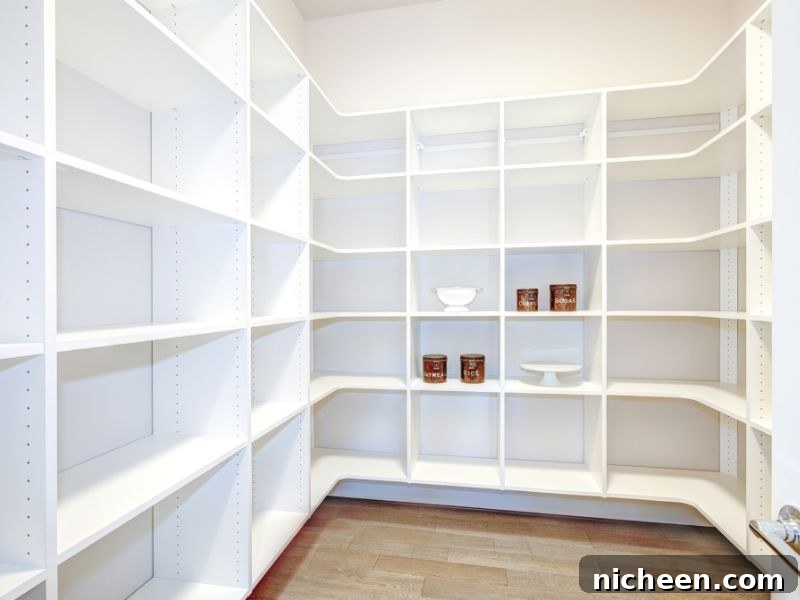
Start by removing everything from the pantry. Empty shelves give you the chance to sort thoroughly and identify items you no longer need. Place contents on a counter or table so you can evaluate them one category at a time.
Step 2: Clean the shelves
With shelves empty, give them a thorough wipe-down. Use a mild all-purpose or natural cleaner and remove crumbs, sticky residue, and dust. Consider adding shelf liners for easier cleaning and to protect surfaces from spills and stains.
Step 3: Declutter and group
Sort through everything you removed. Toss expired goods and set aside items your household won’t use. Donating unopened, usable food is a great option. Once decluttered, group remaining items into categories such as baking, grains, breakfast, canned goods, snacks, and spices.
Step 4: Fill organizers and bins
Use clear plastic or glass canisters with airtight lids for staples like flour, sugar, rice, and oats. Baskets and clear bins are perfect for packets, snack bars, and small boxes. Organizers keep like items together and prevent smaller things from getting lost at the back of a shelf.
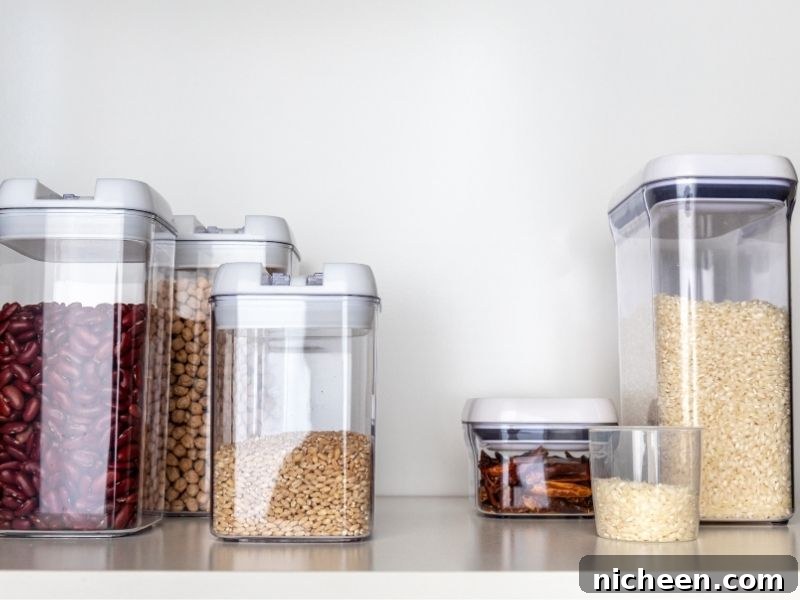
Smaller clear bins or shallow baskets make it easy to pull out groups of items at once. Consider investing in a few sizes so you can customize sections to fit cereals, snack packs, and baking mixes.
Step 5: Create zones for your food
How do I group things in my pantry?
Divide the pantry into zones so every item has a logical home. Zones make stocking and meal prep faster and reduce the chance of forgotten ingredients. You can create zones in several ways:
- By food type: Keep pastas together, sauces together, grains together, and canned goods together for easy browsing.
- By cuisine or recipe use: Create a baking section, an Italian zone, a Mexican zone, or a baking center for commonly used combinations.
- By meal: Group breakfast items on one shelf, dinner essentials on another, and snacks at a child-friendly height.
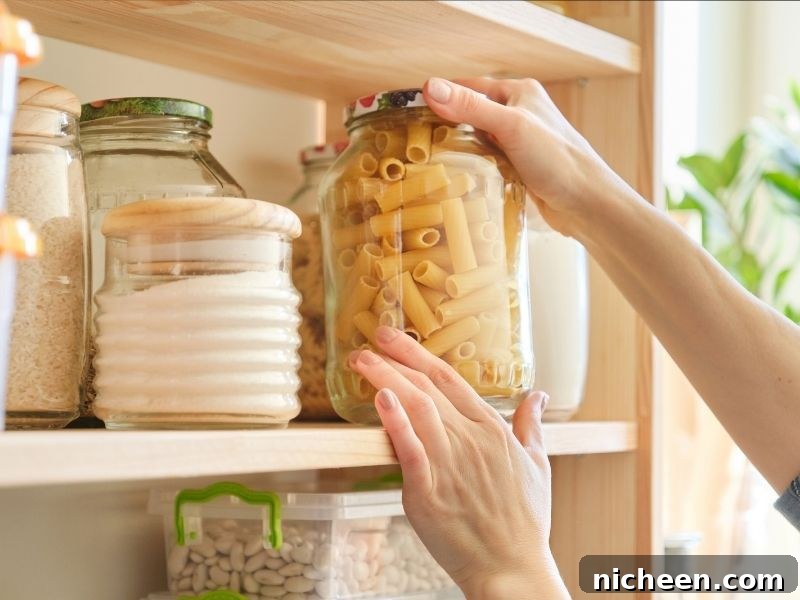
Step 6: Return the food to the pantry
Start by placing larger, bulky items back first so you can see how much space remains. Then fill in with medium and small items, keeping zones and categories consistent. Put everyday items at eye level, less-used items higher up, and kids’ snacks within their reach.
Pantry Organizing Tips to Keep It Working
Creating an organized pantry is one thing; maintaining it day to day is another. These practical habits help your system stay efficient and clutter-free.
- Keep cans visible: Line cans so labels face forward. This makes it easy to identify items quickly and rotate stock.
- Label containers: When transferring items into jars or canisters, label them immediately with the contents and, if you like, the purchase or best-by date.
- Use smart shelving: Add tiered risers, lazy Susans, or shelf inserts to increase visibility and access for small bottles and spices.
- Leverage door storage: Install slim racks, hooks, or small shelves on the inside of pantry doors for wraps, bags, or seasoning packets.
- Practice first-in, first-out: Place new items behind older ones so older products are used first and expire less often.
Pro Tip: Keep healthy, kid-friendly snacks in a low bin so children can grab them independently for lunches or quick bites.
More Simple Home Management Ideas
- How to Get Ready for Guests in a Hurry
- Best Tips for a Clean House
- How to Organize Paper in Your Home Office
- Time-Saving Tips for Busy Families
Now you know how to organize a pantry effectively and keep it that way. With a clear plan, the right containers, and simple daily habits, your pantry can become a functional, efficient part of your kitchen that supports healthy meals and less waste.
This post contains affiliate links.
FOLLOW US on FACEBOOK, TWITTER, INSTAGRAM, and PINTEREST to see more recipes, crafts, parenting tips, and DIY ideas.