

Simple, practical closet organization tips to help you keep your wardrobe neat, tidy, and smelling fresh. A well-organized closet makes getting dressed easier and protects your clothing, shoes, and accessories from odors, dust, and damage.
Closets are ideal for storing shoes, purses, belts, jackets, coats, and ties without cluttering living spaces, but they can trap odors from worn items if not managed. With a few cleaning habits and organizational strategies, you can maintain a fresh, functional closet that extends the life of your garments and keeps your home feeling clean.
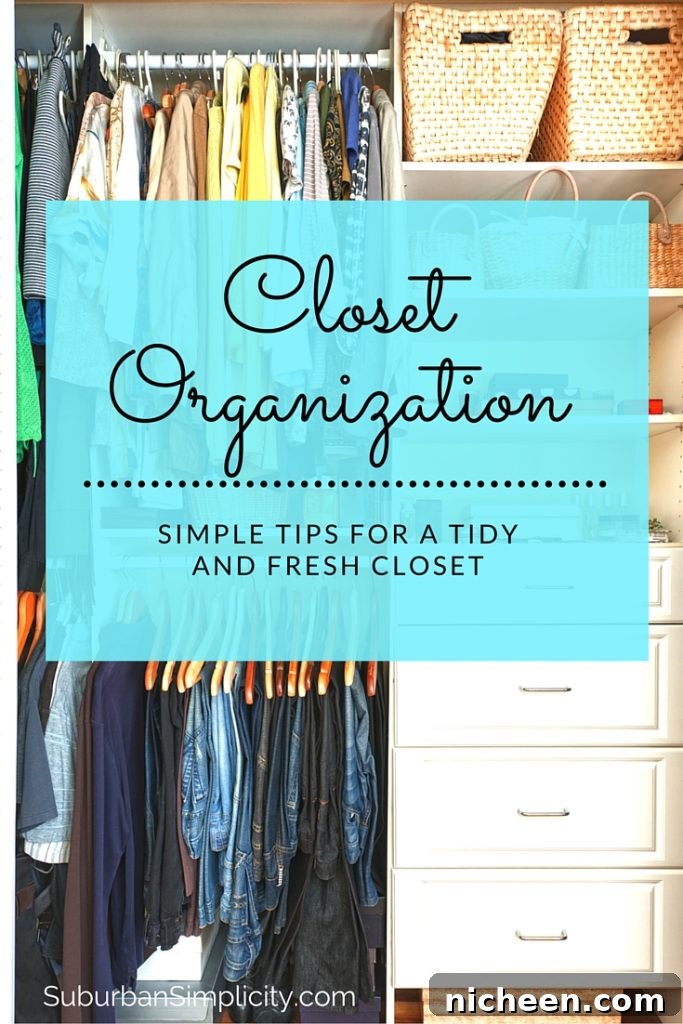
Closet Organization: Simple Tips for a Tidy and Fresh Closet
Start with a clean, sanitized closet to keep odors and dirt under control.
- Sweep or vacuum the closet floor and dust shelves and rods. Wipe down walls and any surfaces periodically to remove dust and buildup.
- Declutter first: donate or discard items you no longer wear to free up space and improve airflow.
- Clean shoes before returning them to the closet—wipe exteriors and, when possible, wash or replace insoles.
- Launder or air-out jackets, sweaters, and other outerwear before storing them. Never return sweaty or damp clothing to a closed closet.
- If you wear an item for a short time (e.g., a coat used on a commute), air it out on a hook in a living area before hanging it back with clean garments.
- Use a fabric-safe spray or odor neutralizer on shoes and garments when necessary, but avoid heavy fragrances that can build up over time.
Give clothes room to breathe—proper spacing prevents wrinkles and reduces stale smells.
- Avoid overloading hanging rods. Hang each garment on its own hanger and leave space between hangers to improve circulation.
- Organize clothes by type and frequency of use so you aren’t constantly shifting items from one place to another.
- Install a second hanging bar or add shelving if you need more hanging or folded storage without cramming items together.
- Fold sweaters, jeans, and casual tees on shelves rather than hanging them; this saves rod space and keeps heavier items from stretching.
- Add hooks for bags, scarves, belts, and frequently used jackets so they’re accessible and don’t crowd the main wardrobe.
- Use uniform, thin hangers to maximize space and create a tidy visual line—this also helps garments hang properly and breathe.
- Keep the closet well‑lit so you can see items clearly and avoid leaving forgotten, worn pieces tucked away for long periods.
Control odors with simple, natural solutions.
Bonus tip: cut a dryer sheet in half and place each half inside a shoe to help keep it deodorized while in the closet.
- Place unscented or lightly scented dryer sheets in corners, on shelves, or inside shoes to give a subtle fresh scent.
- Create small sachets of potpourri or dried herbs (lavender, cedar, or your preferred scent) and hang them from rods or tuck them on shelves.
- Cedar chips and blocks are effective at keeping closets fresh and deterring moths. Put cedar in mesh bags and distribute them around the closet.
- Absorbent materials—baking soda, charcoal, or coffee grounds—work well as odor absorbers. Put them in small breathable containers (recycled oatmeal or baby food jars with perforated lids) and place them discretely on shelves or the closet floor.
- Chalk in a mesh bag or small tray can absorb moisture and odors near shoe storage. Replace absorbent materials occasionally to keep them effective.
- If your closet tends to get musty, periodically leave the door open on a dry, sunny day to air it out, or place a shallow container with activated charcoal on the floor to help reduce musty smells.
Combine cleaning, decluttering, and odor-control techniques for best results. Regular maintenance—sweeping, wiping surfaces, airing worn items, and rotating absorbent deodorizing agents—will keep your closet fresh year-round and preserve your clothing and accessories.
Want more home organization ideas? Consider guides on home office organization (what to keep and for how long) and basic kitchen organization to apply similar decluttering and storage principles throughout your home.
If you found these tips helpful, follow organization-focused social accounts or blogs for ongoing advice and seasonal closet refresh ideas. Consistent small steps make closet organization a manageable habit rather than a chore.